What Roller and Solar Shades Cost in Whitestown Homes Today
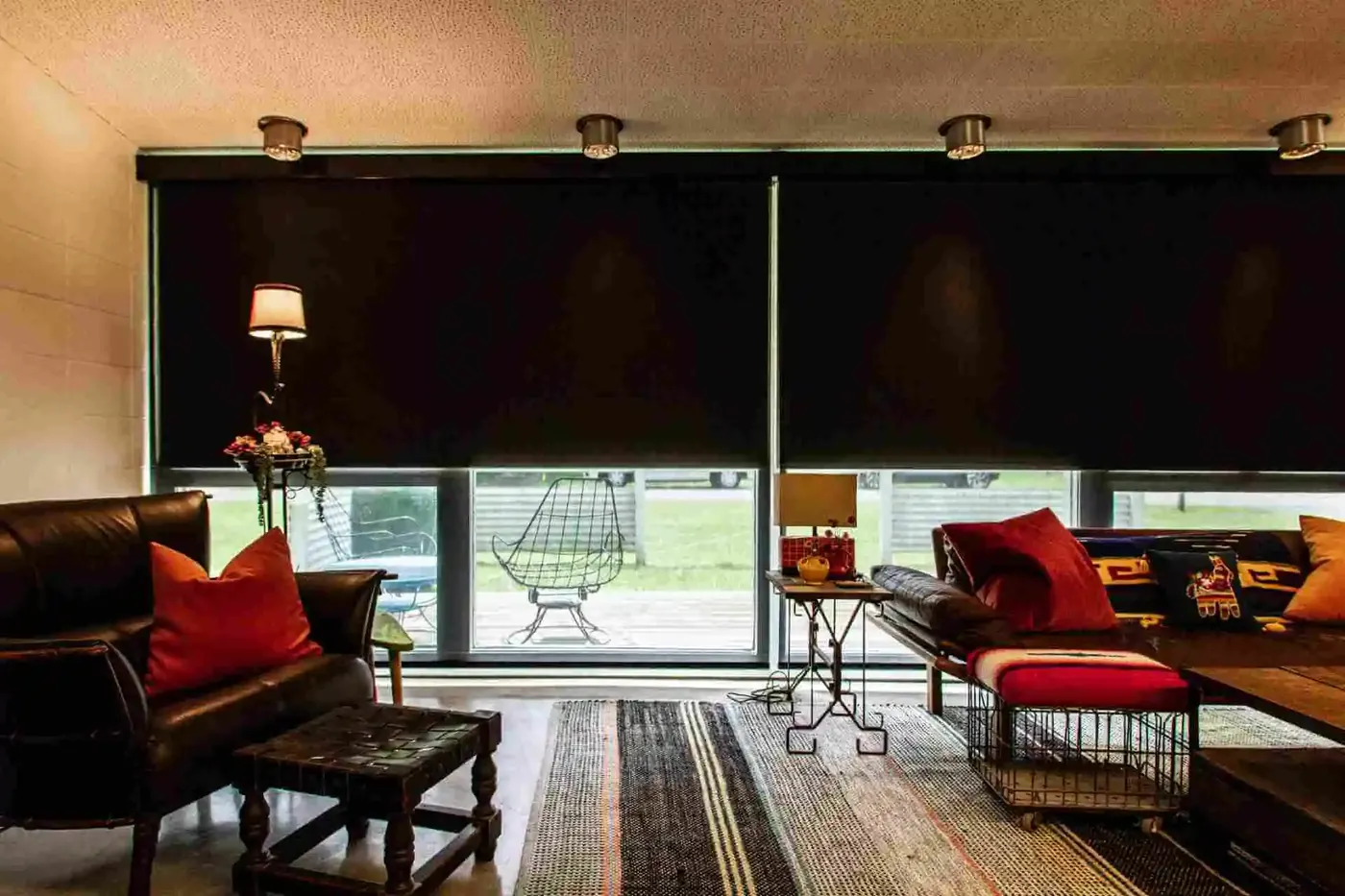
A roller shade is four decisions wearing one simple shape: what fabric, which way it rolls, how the top gets covered, and how level it goes in. Get those right in a Whitestown home and the shade almost disappears into the window. Get one wrong and you notice it every day. Here is what actually drives each of those calls.
The Anatomy of a Roller Shade
Strip a roller shade to its parts and there is not much there: fabric wrapped around a tube, held by brackets. Turning that tube is a clutch and bead chain most of the time. Some shades use a cordless spring instead, and a growing number use a motor. A hembar rides the bottom hem to keep the fabric weighted and square. Because the machine is so simple, every dollar and every flaw traces back to a handful of choices.
Regular roll feeds fabric off the back of the tube, closest to the glass, so the roll almost disappears. Reverse roll feeds it off the front, which pushes the roll toward you and opens a wider gap at the edges. Pick reverse roll to clear an obstruction, a crank handle or a deep sill, and settle it at the measure appointment, before anything is cut. Then there is what covers the tube. Exposed saves money and depth. A fascia hides the hardware and lines a run of Whitestown windows up at one clean height. A full cassette seals it completely, with room for a light blocking pocket. Get the brackets level and the shade behaves for years. Get them even slightly off and a wide shade telescopes, drifting sideways with every turn until fabric drags on a bracket.
Solar Screen Fabric and Openness Factor
Openness factor measures the open space in a solar screen's weave, expressed as a percentage. Common ratings run 1, 3, 5, 10, and 14 percent. Lower numbers cut more glare and show less of the outdoors.
Color affects performance as much as the rating does. Dark fabric absorbs scattered light, sharpening the view and cutting glare hard. Light fabric reflects more heat but scatters light on the inside face, which hazes the view. For a typical Whitestown living room, 3 or 5 percent in a medium to dark tone is a safe default. Reserve 1 percent for a window where glare alone is the problem. Two limits are worth knowing up front. Solar screens do not provide nighttime privacy, since the effect relies on daylight brightness and reverses once your lamps are on and the sun is down. And screens reduce and slow fading from sun exposure without ever stopping it, since ultraviolet is only one part of what fades a fabric.
Choosing Roller Shades Room by Room
We get called into houses where one good shade got used for every window, and it never quite works. A solar screen in a bedroom leaves the room exposed at night, and blackout over a nice view is money spent hiding the reason you bought the house.
- Living and family rooms: a 3 to 5 percent solar screen in a medium to dark tone, with a fascia running the length of the wall.
- Kitchens: vinyl or vinyl coated fabric near a sink or range, since woven screens grab grease and stay that way.
- Bedrooms: full blackout hardware for a day sleeper or a napping toddler, room darkening under a lined drapery panel for everyone else.
- Home offices: a 1 to 3 percent dark screen so a monitor stops throwing back glare.
- Bathrooms: nighttime opacity checked from the yard after dark, not trusted from the showroom.
A wide slider almost always looks better carrying two shades under one shared fascia than one giant shade with a tube heavy enough to sag. The Whitestown houses that feel put together are the ones where the roll treatment got decided for the whole main floor at once.
Most callbacks on a roller shade trace back to a short list of avoidable things: a bracket level that got eyeballed instead of checked, or blackout fabric sold without the channels that actually make a room dark. Whitestown Window Treatments walks through both at the measure, not after installation. Call (317) 999-5154 to set up a Whitestown measure done properly the first time.
What Roller Shades Cost
Stock roller shades run roughly $60 to $600 a window nationally. Custom shades, measured and installed, run roughly $250 to $2,600 a window nationally, moved up that range by fabric grade, tube size, roll covering, and lift choice. A bead chain clutch sits at the low end. Cordless spring costs more and struggles on very large shades. A motor is usually the biggest line item, though battery power runs roughly $100 to $300 a window less than hardwired nationally and only asks for a battery change about once a year.
Custom fabrication normally takes two to five weeks anywhere around Whitestown. A promise of something much faster usually means a stock size, not a shade built to your opening. A few costs show up later rather than on the invoice: dye lots that shift between orders, cord tensioners that must stay fastened to the wall, and a service call once an out of level shade starts to telescope. A written quote naming the fabric, the openness rating, the lift, and the mount deduction heads most of that off.
Getting a Room Actually Dark
Every inside mounted shade ships slightly narrower than its opening so the fabric can move without rubbing the frame. That built in clearance is small, around a sixteenth of an inch per side, but once you add the bracket hardware, the gap you can actually see tends to land closer to three quarters of an inch per side. Shades taller than about 120 inches, or noticeably taller than they are wide, usually need more clearance still.
Room darkening and blackout are two different fabrics doing two different jobs, whatever the showroom tag might imply. Room darkening blocks most of the light trying to get through the cloth. Blackout is opaque, typically thanks to a coating on the back. Either one alone still leaves light coming in around the fabric, not through it. Getting a room truly dark takes the whole system: blackout fabric, side channels that catch the edges, a cassette or pocket sealing the top, and a snug fit at the sill. Worth every bit of it in a nursery or media room, and often more than a guest room needs, where blackout fabric by itself usually gets the job done.
Frequently Asked Questions
What does openness factor mean on a solar shade?
It's the percentage of open space in the weave. A 1 percent fabric is woven tight and cuts the most glare while showing the least view. A 10 percent fabric keeps more of the view and lets more light through. Color matters just as much as the number: a dark fabric gives a sharper view out and stronger glare control, while a pale one reflects more heat but scatters light and hazes the view. Most living rooms land at 3 or 5 percent.
Will a solar shade give me privacy at night?
No, and this trips people up constantly. Solar screens work off a brightness difference, not opacity. During the day the outdoors is far brighter than the room, so you see out and nobody sees in. Once it's dark and the lamps are on inside, that reverses completely, and anyone outside can see through the weave, with higher openness numbers showing even more. For genuine nighttime privacy, switch to room darkening or blackout fabric instead. Drapery closed over the shade after dark helps too.
Why is there a light gap on my inside mount roller shade?
Because the fabric needs room to move without rubbing the frame. The factory makes a small deduction, typically around a sixteenth of an inch per side, and bracket hardware adds more on top of that, so the gap you can actually see on a roller system often runs close to three quarters of an inch per side. Shades taller than about 120 inches, or shades much taller than they are wide, get larger gaps still. The real fixes are an outside mount with overlap or side channels.
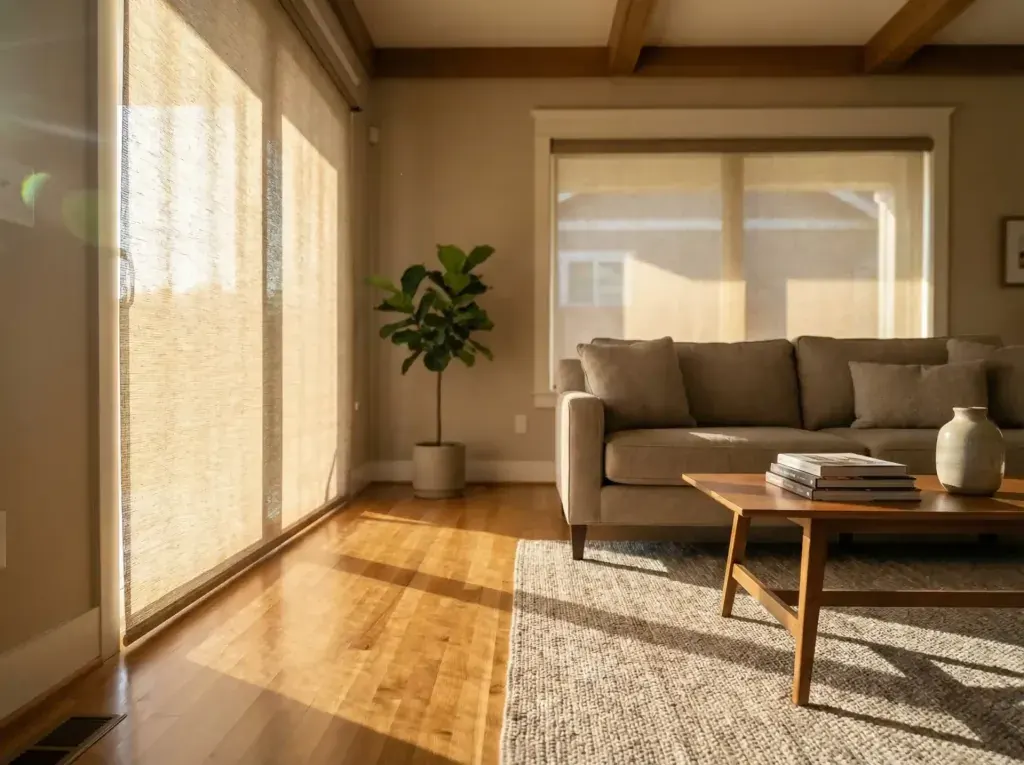 Window Treatments That Actually Hold Up in a Whitestown Bathroom
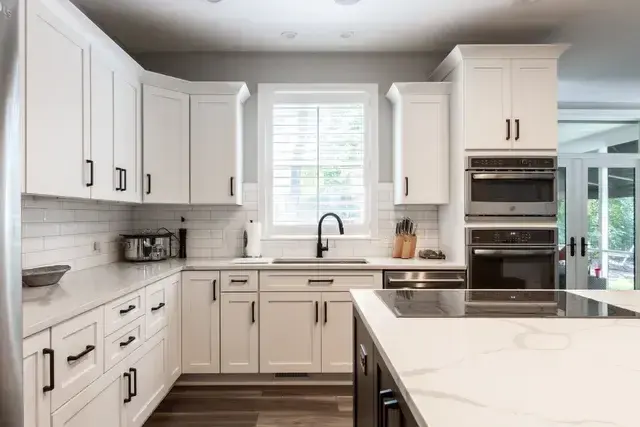 DIY Window Measuring: A Straight Answer on the Risk
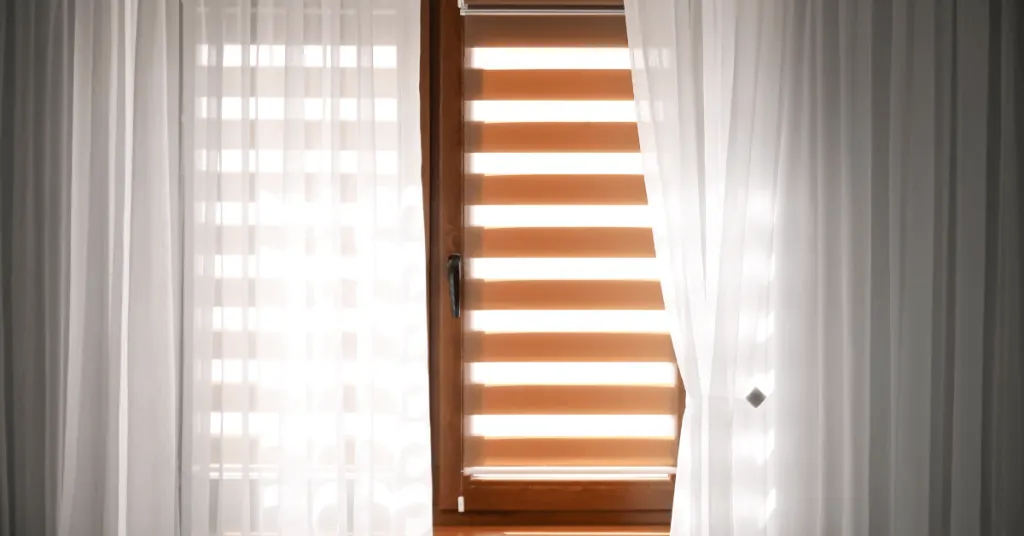 Why Whitestown Rooms Feel Cold Even With the Heat Running