Window Treatments That Actually Hold Up in a Whitestown Bathroom
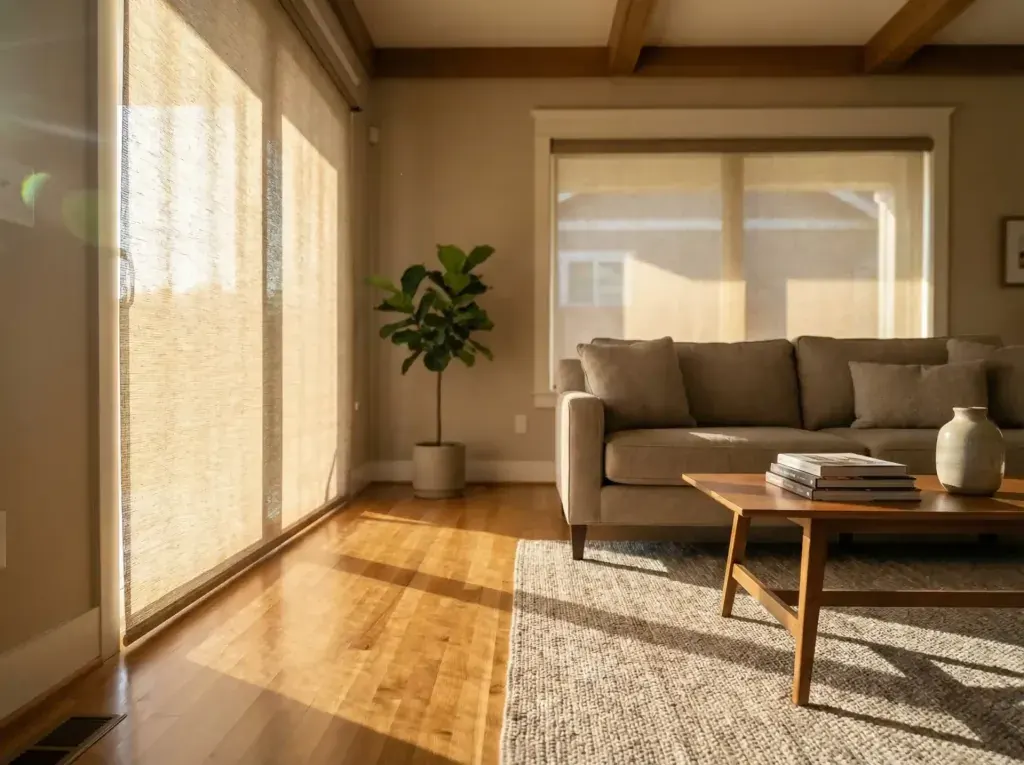
Bathrooms and kitchens work harder on window treatments than every other room in the house combined, mostly because of one thing: water, in the air or in the sink, showing up every single day.
How Humidity Changes What You Should Hang
A bathroom runs through humidity swings that no other room in the house sees, going from normal room air to near saturation during a hot shower and back down again in twenty minutes. Real wood blinds don't handle that cycle well. The wood absorbs moisture and swells, and over repeated cycles the slats can warp badly enough that the blind stops closing flush against itself.
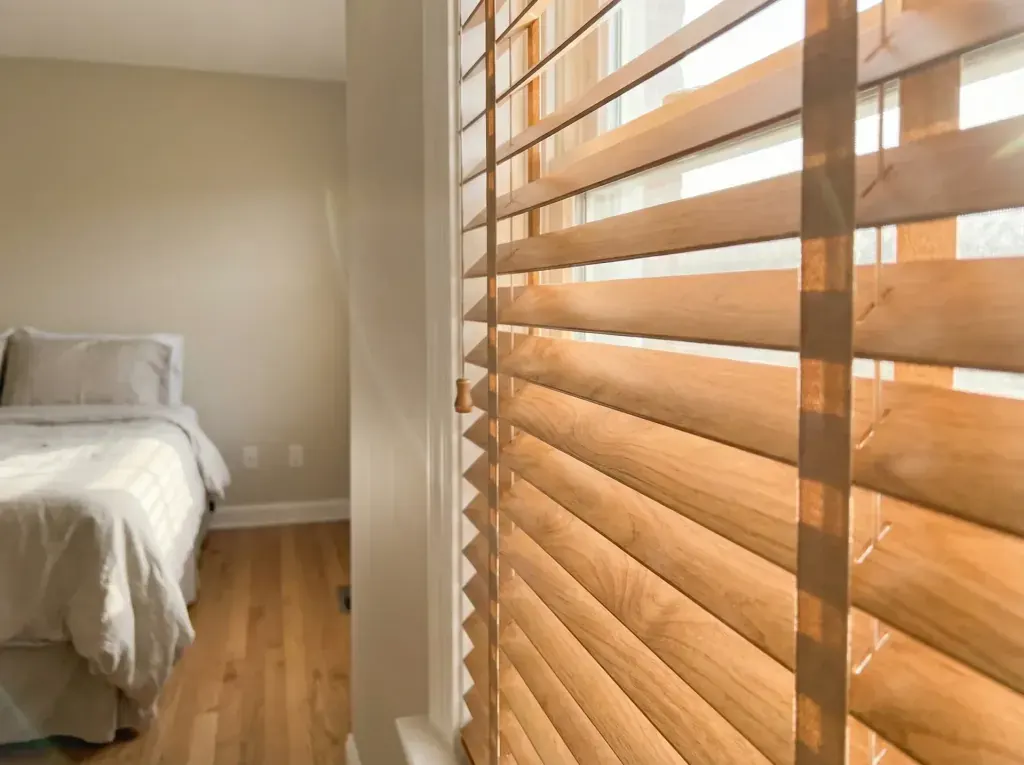
Faux wood, which is really a PVC or composite material dressed up to look like wood, doesn't absorb moisture the same way, so it holds its shape through the same humidity swings that would eventually ruin the real thing. That's the main reason faux wood shows up so often in bathroom recommendations, in Whitestown homes and everywhere else. It's not a style preference, it's the material actually surviving the room.
Getting Privacy Without Losing the Light
Material affects privacy just as much as the shade's operating style does. A tightly woven solar or light-filtering fabric blocks a direct sightline while still passing enough light through to avoid a dark room, while a loosely woven fabric can let more shape and movement through than expected, especially once it's lit from behind at night.
Frosted vinyl and certain cellular fabrics marketed specifically for bathrooms are built with a denser weave or an opaque backing for exactly this reason, privacy during both day and night rather than only one or the other, which matters more in a bathroom than in almost any other room in the house.
This is where a lot of homeowners end up choosing differently for the two rooms even within the same house. A kitchen window might get a simple light-filtering roller since privacy matters less there, while the bathroom next door gets the denser, purpose-built privacy fabric instead, and that split usually makes more sense than picking one material for both rooms out of convenience.
The Trouble With Windows Over a Sink or Tub
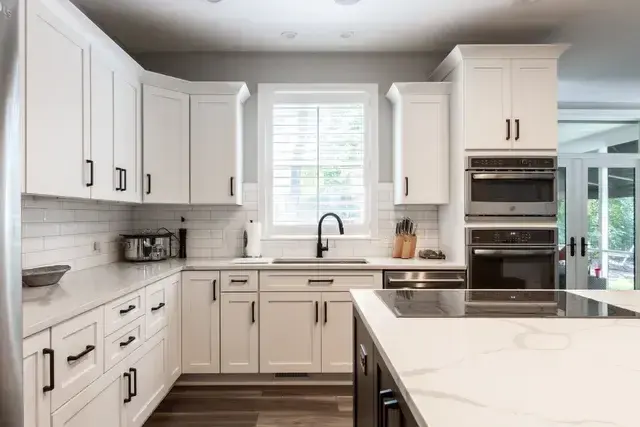
The window over the kitchen sink is often the one window in the house that gets touched every single day, which means whatever hardware is on it needs to hold up to constant use, not just look good on install day. A cord or chain hanging down near a sink full of dishes and running water is asking for trouble, both from wear and from getting caught on something.
Cordless lift solves the daily-use problem directly, since there's nothing dangling to catch on a faucet or a dish rack. For a Whitestown kitchen where the sink window also happens to be the main light source over a prep area, a shade that's easy to raise fully out of the way during the day and drop for privacy at night earns its keep fast.
This is also where cost and convenience overlap in a useful way. A cordless roller shade over the sink is usually one of the least expensive upgrades in the whole kitchen, since it's a single window with straightforward dimensions, which makes it a reasonable place to start if you're tackling the room's windows one at a time.
Hardware That Doesn't Rust or Swell
Hardware failure follows a similar pattern to the material failure above it. Steel brackets rust from the inside of the screw hole outward, so the first sign is often a small orange stain bleeding out around the screw rather than obvious rust on the visible metal itself.
Stainless and coated hardware simply doesn't have this failure mode, which is why it's worth specifying at the time of the order rather than assuming standard hardware will be fine. It costs a little more upfront and avoids a repair call in a Whitestown kitchen or bathroom a few years down the road when a rusted bracket finally lets go.
Material is easier to judge in person than from a swatch card. A free in-home measure from Whitestown Window Treatments lets you see and feel the actual faux wood and fabric options against your own bathroom or kitchen light before committing to anything.
Keeping Grease and Steam From Ruining a Shade
Any fabric or material chosen for privacy in a bathroom still has to deal with steam on a near-daily basis, which is why the privacy conversation and the material conversation aren't really separate. A dense, good-looking privacy fabric that mildews after six months of showers wasn't actually the right choice, no matter how well it blocked the view.
This is the practical argument for a vinyl or PVC-faced shade over a natural fiber option even when both offer similar privacy: one wipes clean and keeps its shape, the other needs more careful handling and better ventilation to last the same number of years in a Whitestown bathroom.
It also helps to think about who else uses the bathroom. A guest bathroom that sees occasional use has more flexibility for a slightly higher-maintenance material, since it isn't dealing with steam every single day the way a primary bathroom attached to a bedroom does.
Frequently Asked Questions
Can I put real wood blinds in a bathroom if I have a good exhaust fan?
A strong exhaust fan helps, since it pulls humid air out faster and shortens how long the wood is exposed to it after every shower. It doesn't eliminate the risk entirely though, since even a well-ventilated bathroom still swings through a humidity spike every time the shower runs. Faux wood remains the safer choice for a full bathroom, with real wood better suited to a powder room or half bath that doesn't have a shower or tub in it at all.
What's actually the difference between faux wood and real wood blinds?
Faux wood is a PVC or composite material formed and finished to look like painted wood, while real wood blinds are milled from actual basswood or a similar hardwood. Faux wood is heavier per slat and doesn't absorb moisture, which is why it holds up in bathrooms and kitchens where real wood eventually warps. Real wood is lighter and generally considered to have a warmer, more natural look, which is why it still gets chosen for dry rooms like a living room or dining room.
Is it worth paying more for a wipeable or vinyl-faced shade in the kitchen?
For a window near the stove or sink, yes, generally. The time saved on cleaning and the years added to the shade's life usually outweigh the modest price difference over a comparable fabric shade. For a kitchen window farther from cooking, like one over a breakfast nook away from the range, a standard fabric option is less likely to run into the same grease problem and the upgrade matters less.
 DIY Window Measuring: A Straight Answer on the Risk
 Why Whitestown Rooms Feel Cold Even With the Heat Running
 Wood Blinds Room by Room in a Whitestown House: Design Notes