Why Whitestown Rooms Feel Cold Even With the Heat Running
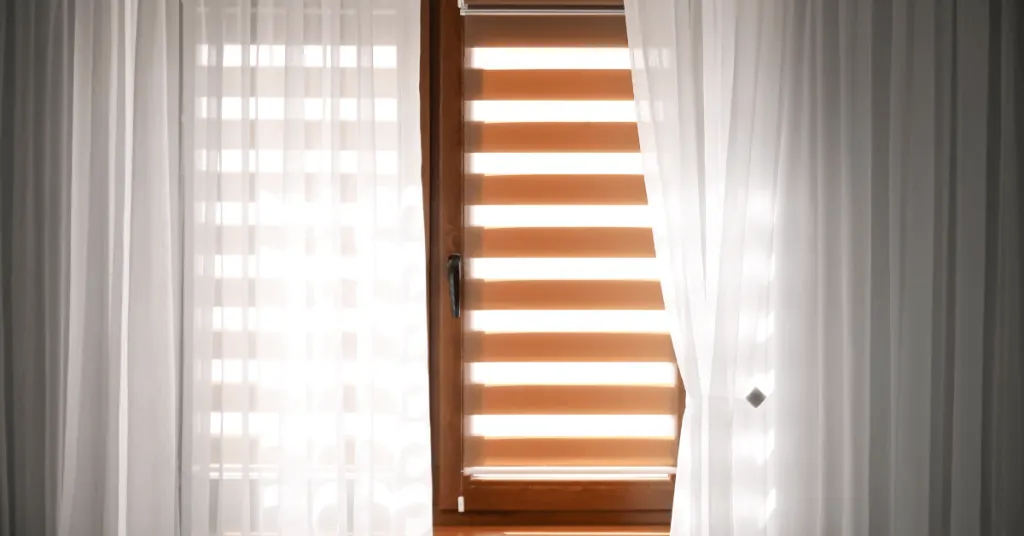
Budgeting for window treatments in an older Whitestown home means figuring out where the coldest rooms actually are before deciding what to spend where.
Why Older Windows Feel Colder Than the Thermostat Says
Most people assume a cold spot near a window means air is leaking in somewhere, and sometimes that's true. But plenty of Whitestown homeowners have a tight, well-sealed window that still feels cold to sit near, and the reason is simpler than a leak: the glass surface itself is cold, and a body loses heat to a cold surface by radiating toward it, regardless of whether the air around it is moving.
Add to that a convective loop. Air against the glass cools and sinks, then spreads out along the floor in front of the window, which reads as a draft even when the frame is sound. Single-pane and early double-pane windows, both still common across older Whitestown housing stock, have a lower insulating value than current glass, so this effect is stronger on them. None of it shows up on a thermostat, which only measures air temperature at one point in the room.
How Cellular Shades Trap Air Instead of Just Blocking Light
The simplest way to picture a cellular shade is a thin blanket made of trapped air pockets instead of insulation batting. The fabric folds into rows of small hexagonal cells, and each one holds a little pocket of still air between the room and the glass. Still air doesn't move heat around nearly as fast as circulating air does, so the shade slows down how quickly warmth from the room gets pulled toward that cold window.
Cells come in a few sizes, from about 3/8 inch up to a full inch, in single or double-row construction. A double-cell shade has two layers of pockets instead of one and insulates somewhat better, at a higher price and a thicker stack at the top of the window when it's raised. For a nursery, a home office, or a bedroom that's always the coldest room in the house, that upgrade is usually worth asking about.
What Window Treatments Can and Can't Fix
Straight answer: no, a shade will not fix a window with an actual air leak. If wind makes a window whistle or you can feel moving air with your hand at the frame, that's a seal failure, and no amount of fabric on the inside solves it. That calls for weatherstripping, caulk, or in bad cases a conversation about the window itself, not a shade.
What a shade and layered drapery do fix, reliably, is the radiant chill and the convective draft that exist on a perfectly sealed Whitestown window just because the glass is cold. Most rooms have some of both problems mixed together. Treating them as the same issue is how people end up disappointed with a purchase that was never going to solve what was actually bothering them in the first place.
Comparing actual R-value and cell size across a few fabric options, ideally against your own windows, is worth doing before ordering, and a free in-home measure is a reasonable time to ask.
Layering Shades and Drapery for the Coldest Rooms
Layering costs more than a single treatment, plainly, since it means buying both a shade and drapery for the same window. Stock drapery panels sit at the low end of the national price range, roughly $50 to $150 apiece, while custom lined panels with hardware climb well past that depending on width and fabric. It's rarely worth doing across a whole house on a tight budget.
Where it earns its cost is the specific rooms that are actually uncomfortable: a living room with a big west or north exposure, a primary bedroom that runs cold, a sunroom used year-round. Spending the layered budget there and leaving secondary rooms with a single shade is a reasonable way to split a limited budget across a Whitestown house.
Mount Style and Fit Change How Much Draft Gets Through
A cellular shade only works as well as its fit. Inside-mounted shades sit within the window frame, which looks clean but leaves a gap between the shade's edge and the frame on both sides, right where cold air rolling off the glass escapes into the room. Most inside-mount cellular shades need at least 2.5 to 3 inches of clear depth for the headrail to sit properly; slimmer low-profile headrails can work with less.
Outside mounting, where the shade hangs on the wall or trim above and around the window, covers the whole opening including the frame itself, and it's usually the better choice on an old or drafty window because it closes off more of the path air has to travel to reach the room. Side channels, a track running down each edge of the shade, are available on some cellular products and close the remaining gap along the sides. They add a bit of cost and a little friction to raising and lowering the shade, but on a genuinely cold room they're worth asking about.
Frequently Asked Questions
Will cellular shades stop a window from feeling drafty?
They'll reduce the radiant chill and the convective draft that come off cold glass, which is most of what people notice sitting near a window in winter. They won't stop an actual air leak from a failed seal or worn weatherstripping. That's a separate repair, worth checking for before assuming shades alone will solve a cold room.
What's the difference between single-cell and double-cell shades?
Single-cell fabric has one row of air pockets and double-cell has two, stacked front to back. Double-cell insulates somewhat better, generally in the R-3 to R-3.5 range compared to R-1.5 to R-2 for single-cell, but costs more and stacks a little thicker at the top when raised. For a genuinely cold room it's usually worth the difference.
Does mount style really make that much difference?
It can. Inside-mounted shades leave a small gap between the fabric and the frame on both sides, right where cold air rolling off the glass gets past the shade. Outside mount overlaps the frame instead, which usually closes off more of that path, especially on an older or slightly out-of-square window.
 Window Treatments That Actually Hold Up in a Whitestown Bathroom
 DIY Window Measuring: A Straight Answer on the Risk
 Wood Blinds Room by Room in a Whitestown House: Design Notes