Motorized Shades

Motorized Shades in Whitestown, IN With Whitestown Window Treatments

Great on the high glass, honest about the batteries

Call (317) 863-9966Get Free Quote
Quick Answer

Answers here cover the whole lifecycle: measuring, ordering, fabrication, installation, care and service. A custom window covering is a long-term purchase and the later stages deserve as much attention as the first.

  • Service: Motorized Shades for Whitestown homeowners
  • Service area: Whitestown, IN and surrounding areas
  • The measure gets scheduled quickly. The build does not, because your fabric or shutter panel is cut to your numbers after you order. Two to five weeks is normal. Service calls skip that step entirely.
  • Insured and bonded
  • Serving Whitestown, IN since 2008
Motorized Shades Services

Expert Motorized Shades for Whitestown Homes

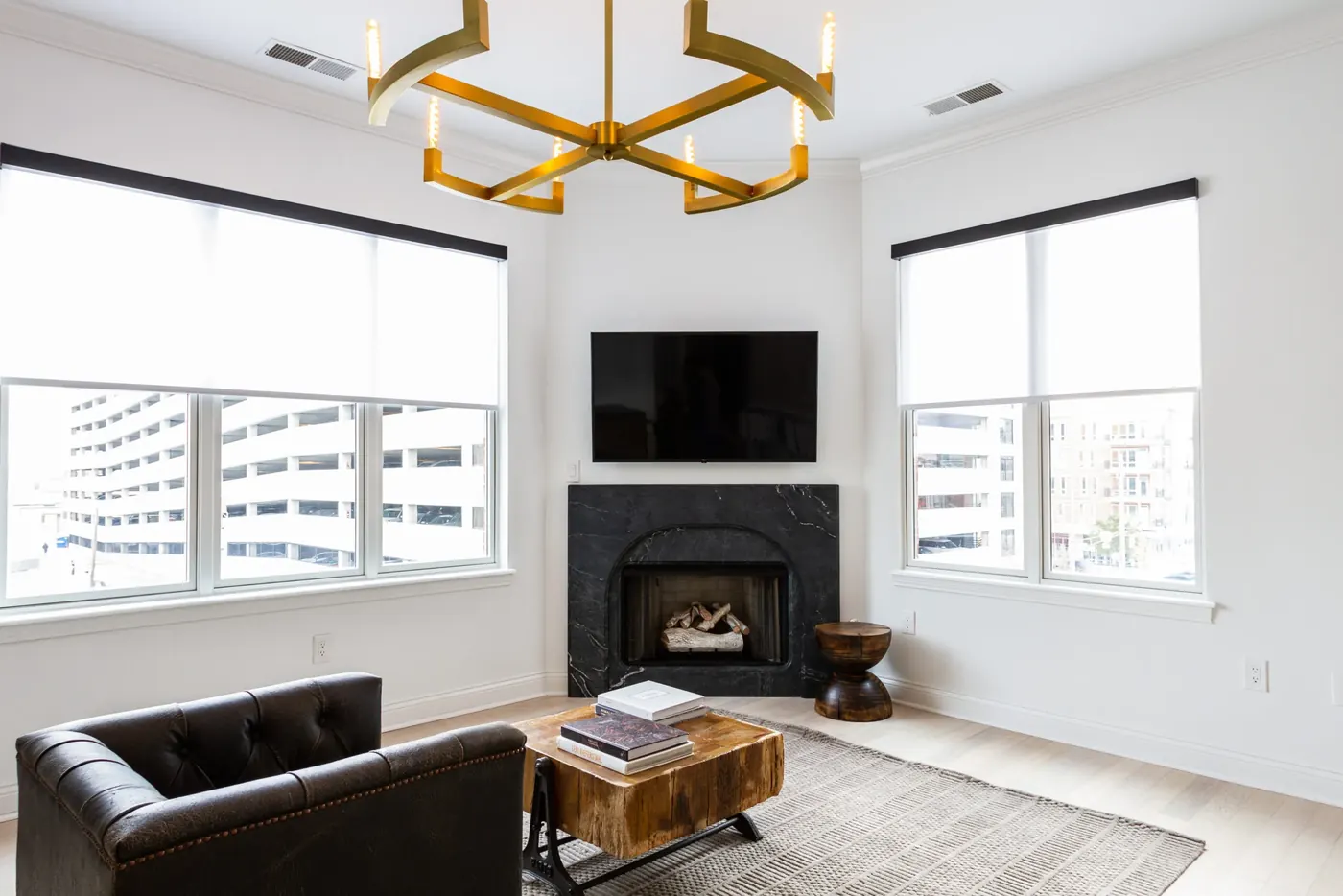
Motorization earns its place on the openings you can't reach and the ones you'd never bother with by hand. In Whitestown that means the two story entry and stairway glass in the larger plans, the 3,062 square foot Johnstown and the 3,388 square foot Dayton at Trailside, and long runs of matching openings where operating six shades one at a time is the reason they stay closed all summer. The market here is already wired for it: Cardinal Pointe publishes a Ring Video Doorbell Pro and a smart thermostat as standard inclusions, and its association dues bundle high speed internet and TV, so the house arrives expecting to be automated.

Batteries are the cost nobody mentions at the sale. Hunter Douglas states that PowerView battery life is about one year, and a house with fifteen motorized shades is a house with fifteen battery changes on a rolling schedule, some of them fifteen feet in the air. Plan for it or hardwire instead. Two more things worth hearing early: radio range is finite, so a hub in the kitchen of a 3,388 square foot two story house will need a repeater to reach the far bedrooms, and travel limits drift over years of use and need resetting. The national range for motorized runs $300 to $1,500 per window installed.

When to Call

Signs You Need Motorized Shades

If you notice any of these in your Whitestown home, it is worth booking a measure. None of it is urgent, and none of it fixes itself either.

High windows nobody has opened in years

The system has no record of what's installed

Batteries died in February on the north side

The hub brand stopped making the motors you have

Glass above the tub is out of reach

You keep forgetting to close the west shades

The previous installer owns your app account

A morning shade wakes everyone when it runs

Cords hang within reach in a child's room

Existing motors have stopped responding from the kitchen

Our Process

How Whitestown Window Treatments Handles Motorized Shades

Every job follows the same five-step process. Transparent, thorough, and done right the first time.

1

Radio path tested on site

2

Three widths, three heights

3

Accounts and passwords handed over

4

Keypad locations chosen with you

5

Battery change behavior tested on site

Real Project Photos

Motorized Shades in Whitestown

Photographs from real motorized shades jobs completed by our crew in Whitestown and surrounding areas.
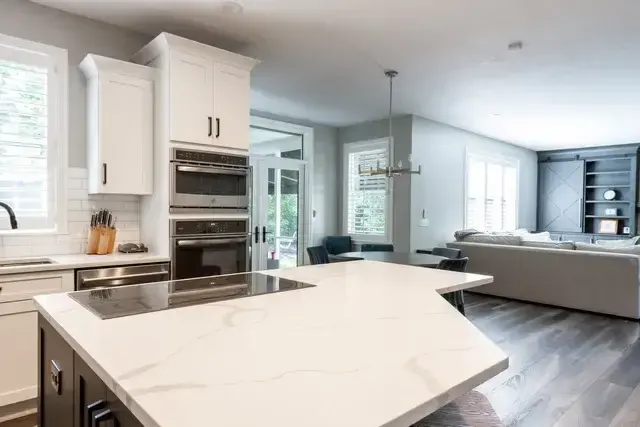
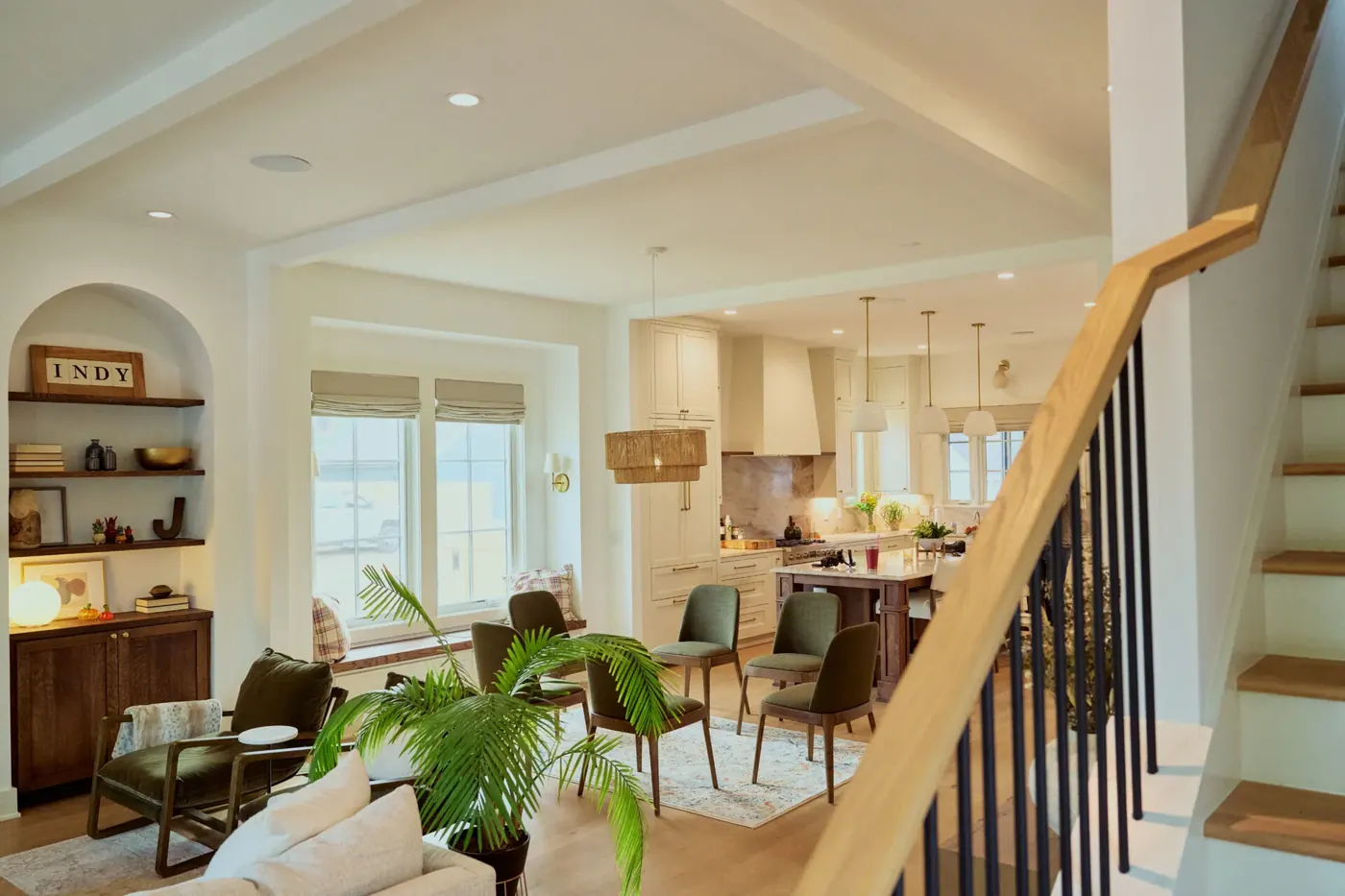
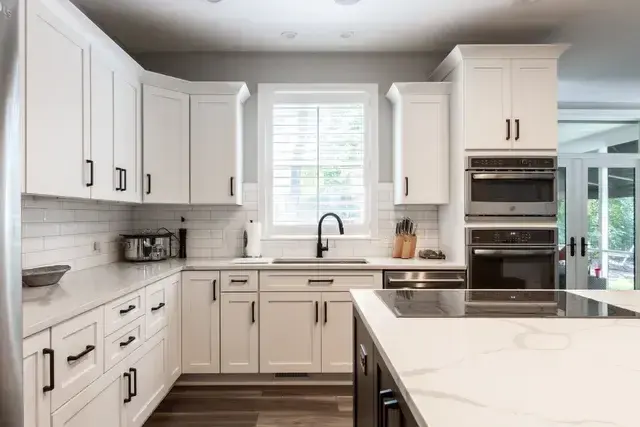
Custom shades measured and installed in WhitestownPlantation shutters fitted to a Whitestown windowCellular shades in a Whitestown living room
Scope of Work

What Motorized Shades Includes

Every Whitestown job is documented item by item. Here is what the crew covers.

Power method decided per window before anything else: battery, rechargeable or hardwired

Battery replacement cost and interval put in writing before the order, not after the install

Hardwired runs referred to a licensed electrical contractor, with our low-voltage locations marked for them

Radio path checked on site, since masonry, foil-faced insulation and metal studs all cut range

Hub or bridge placement chosen for signal, not for whichever shelf is closest to the router

Repeaters specified where a shade sits on the far side of a wall the signal won't cross

Protocol settled up front, plain RF for a standalone group or Zigbee, Z-Wave, Thread or Matter for integration

Three widths and three heights per opening with a diagonal square check

Mounting depth measured for the motor, the tube and any cassette or fascia

Roll direction and control side written on the order the same as any manual shade

Motors paired and addressed on site, then labeled so the next person can tell them apart

Travel limits set at the top and bottom of every shade and re-checked after the fabric relaxes

Scenes built with you in the room so the buttons match how you actually use the house

Sun sensors sited where they read real sun rather than shade from the eave

Astronomical timers set to local sunrise and sunset so schedules drift with the season

Remotes, keypads and app accounts handed over with the passwords in your name

A written walkthrough of how to re-pair a shade and reset a limit if you ever need to

Written contract with scope, dates and total price, as IC 24-5-11 requires on residential work over $150

Pricing

What Motorized Shades Cost in Whitestown

National figures for motorized window coverings run roughly $300 to $1,500 per window installed. Treat that as a national range for the category rather than a quote for your Whitestown address, and know that the shade itself still follows fabric and size the way a manual one does. Motorization adds the motor, the power method and the control layer on top. A battery motor with a handheld remote is the least expensive path. Rechargeable batteries add a charger and sometimes a small solar panel. Hardwired costs the most because a licensed electrical contractor has to bring power to the header. Then there's the control side: hubs, repeaters, keypads, sensors. Whitestown Window Treatments itemizes all of it so you can see what you're buying in Boone County before you commit.

By Product

How Motorized Shades Differ by Product

Every product in this trade behaves differently in a room. Here is what that means for this work.

Alkaline battery wand: A tube of batteries inside or behind the headrail. It's the cheapest way to motorize and it needs no wiring at all. The cost lands later, in replacement batteries and in getting a ladder out to reach a tall window.

Rechargeable lithium battery: A removable pack you charge every so often, sometimes with a small solar panel doing a trickle charge at the window. It cuts the battery waste and the surprise, and it suits a house where the shades run several cycles a day.

Hardwired low-voltage motor: Constant power to the header, so nothing to charge and nothing to replace. It has to be planned before drywall or fished afterwards, and the power work belongs to a licensed electrical contractor rather than to us.

Point-to-point RF remote: A handheld that talks straight to the motors with no hub in between. It's the simplest thing that works, it keeps the shades off your network entirely, and it's the right call when nobody wants an app.

Hub or bridge: The box that puts your shades on the network so an app, a schedule or a voice assistant can reach them. Where it sits decides whether the far bedroom responds, so we place it for signal rather than for convenience.

Repeater: A small plug-in device that catches the radio signal and passes it along. Specify one when a shade is on the far side of a masonry wall, behind foil-faced insulation, or in a wing the hub can't reach cleanly.

Zigbee or Z-Wave: Mesh protocols where every mains-powered device extends the network. Choose one when the shades need to join an existing smart home rather than run as their own island, and match whatever the rest of the house already speaks.

Thread and Matter: The newer path for cross-brand control, with Thread as the radio mesh and Matter as the common language. It's the choice when you want shades to work with hardware from more than one manufacturer without a translator in the middle.

Sun sensor: A sensor that drops the shades when direct sun hits and raises them when it passes. It protects a floor or a piece of art on a hot elevation without anyone thinking about it, provided we site it where it reads real sun.

Astronomical timer: Scheduling tied to local sunrise and sunset rather than clock times, so the shades follow the season instead of needing a reset every few weeks. It's the single setting that makes automation feel considered rather than annoying.

Light Control

See What Each Fabric Does To The Light

Pick a fabric below and the window updates. It's a drawing rather than a photograph, so read it as a rough guide to what each family does in a Whitestown room, and to what it doesn't do.

Fabric type

Sheer, 10 percent openness

Ten percent of the weave is open, so you keep the view and most of the daylight. Glare drops a little. After dark, once your lamps are on, someone outside can read shapes through it, which is why this belongs on a view window rather than a bedroom.

Openness factor is printed on the fabric card, so you can compare one line against another before you order anything.

Keeps the viewNot private after dark

Solar, 5 percent openness

The usual pick for a west window or a covered porch. You can still read the yard through it, glare comes down noticeably, and the fabric intercepts a good share of the sun before it reaches you at four in the afternoon.

It also cuts the UV landing on floors and furniture. NFRC puts UV at roughly 40 to 60 percent of fading damage, so this slows fading rather than stopping it.

View and glare controlSlows fading

Solar, 3 percent openness

A tighter weave. The room goes dimmer and the view drops back to an outline. Choose it where the sun is the problem and the view is second, which around here usually means a west wall in July. That's a common call on this side of Indianapolis.

Openness affects how much you see out, not how private you are. A 3 percent fabric still shows silhouettes at night.

View becomes an outlineStrong glare control

Solar, 1 percent openness

Close to a solid fabric with a little view left in it. This is the strongest glare control in the solar family.

The trade is that it darkens the room on a gray January day too. Indianapolis averages a January high near 36F and the light is flat, so think about how the room reads in both seasons before you commit.

Darkest solar optionDim on gray days

Light filtering

No view through it. Daylight comes through the face diffused, so the room stays bright without a hot spot across the television or the kitchen island. This is the default for living spaces.

It isn't private in reverse at night. With the lamps on and the sun down, silhouettes still show.

No view through itBright without the glare

Room darkening

A denser fabric, usually with a liner behind it. Most of the light coming through the face is gone.

Light still arrives around the edges on an inside mount, so a room darkening shade gives you a dim room rather than a dark one. If someone in the house sleeps during the day, say so at the measure and we'll scope it differently.

Dim, not darkEdges stay bright

Blackout

The fabric itself passes essentially no light. What you'll still see is the perimeter. Lutron publishes an inside-mount light gap of about 3/4 inch per side on its Roller 20 and 64 shades, along with a standard factory deduction of 1/16 inch per side, and shades over 120 inches tall or past a 4:1 height-to-width ratio get larger gaps than that.

So if you need a genuinely dark bedroom, that gap has to be dealt with on purpose, either with side channels or by going outside mount. We tell you which one your opening can carry while we're still standing in the room.

Dark facePerimeter needs a plan

Openness factor is a measured fabric spec, so you can compare it line to line. The category names are not measured. One maker's room darkening can behave like another maker's light filtering, which is why the sample books come to the measure and get opened in the room they're going in, at the hour that room has the problem.

Common Questions

Motorized Shades FAQ

Questions we hear most often from Whitestown homeowners considering motorized shades.

Hunter Douglas states PowerView battery life at about one year, and that's the number to plan around rather than the best case in a brochure. Real life varies with how many times a day the shade runs, the weight of the fabric and the width of the shade, so a wide blackout in a bedroom that cycles twice daily drains faster than a small shade on a schedule. Battery wands are straightforward to swap at head height. Fifteen feet up over a Trailside stairway it's a ladder job. That's the single strongest argument for hardwiring the high openings and leaving batteries to the ones you can reach.
If the drywall isn't up, yes, and it's the cheapest it will ever be. Whitestown issued 445 single family permits in the first eight months of 2025, so a lot of these decisions are being made mid construction, and running low voltage to each opening before the walls close costs a fraction of retrofitting later. Hardwired shades never need a battery change and run consistently in cold weather, which matters in a town with a 20.9 degree January average low. Once the house is finished, battery power is usually the sane answer, because chasing wire through a finished two story is disruptive and expensive.
Often not, and that's a planning question rather than a product defect. Radio systems, whether the shades run RF, Zigbee, Z-Wave or Thread, have practical range limits and lose signal through walls and appliances. In the 3,388 square foot Dayton or the 3,062 square foot Johnstown at Trailside, a hub near the router on the main floor typically covers that floor and struggles at the far corners upstairs. A repeater placed halfway solves it. We map the shade locations against the hub position before the order rather than discovering the dead spot on installation day.
That's where motorization stops being a novelty. An astronomical timer tracks sunrise and sunset for your location, so shades follow the season instead of a fixed clock, which matters here because Whitestown's summer sun sits high and its winter sun comes in low and long across open ground. A sun sensor triggers on actual brightness rather than time of day. Scenes group several shades into one command, so a whole west elevation moves together. The practical advice is to start with two or three scenes you'll genuinely use and add more later, because complicated setups get abandoned.
The shades keep working, and that's a distinction worth understanding before you buy. Most systems put the shades and their remotes or wall controls on their own radio network, and the hub only bridges that to your home network and your phone. Lose the internet and you lose remote access and scheduling, not the shades themselves. Cardinal Pointe is a useful example because its association dues include the internet service, so a provider change is a community level event rather than a personal one. We set up local control on every job so nothing in the house depends on a working connection.
Travel limits are the stored top and bottom stopping points the motor drives to, and yes, they drift. Over years of use a shade can start stopping half an inch short at the bottom or leaving a strip of fabric visible at the top. Resetting them is a short sequence on the remote or in the app, and we leave written instructions with every job so it isn't a service call. On a Cardinal Pointe ranch, where every opening sits at single story head height, you can do it from a step ladder. Where they drift fastest is on heavy blackout fabric and very wide shades, since the motor works hardest there. If a shade stops at wildly different points each time, that's a fault, not a limit.
This is the number that should be said out loud before the sale, not discovered after it. Hunter Douglas states that PowerView battery life is about one year. Other manufacturers land in similar territory depending on how many times a day the shade runs, how heavy the fabric is and how tall the unit is. So a house with fifteen battery shades is a house with fifteen battery changes on a rolling schedule. If that sounds like a chore, it is, and it's exactly why we ask about rechargeable or hardwired first.
Batteries are cheapest up front and cost you in replacements and ladder trips. Rechargeable packs cut the waste and the surprise, and a small solar panel at the window can trickle charge them so you touch them rarely. Hardwired is the best experience and the most planning: power has to reach the header, and that work belongs to a licensed electrical contractor. Our rule of thumb is simple. High windows and daily-use rooms want power. A guest room shade you move twice a month is fine on batteries.
Only if you want more than a remote. A point-to-point RF remote talks straight to the motors, it isn't on your network, and it keeps working if your internet doesn't. Add a hub or bridge when you want scheduling, phone control, voice, or shades that respond to something else in the house. The tradeoff is a device to maintain and an account to own. Plenty of Whitestown clients are happier with three good remotes and no app at all.
Almost always radio path rather than a broken motor. RF signal loses strength through brick, block and stone, and it struggles badly with foil-faced insulation, which behaves like a mirror to radio. Metal studs do the same. A shade that worked from the hallway and not from the kitchen is telling you where the wall is. The fix is usually a repeater in the right spot, or moving the hub. We check the path at the measure so this gets designed around rather than discovered.
The limits are the top and bottom stopping points programmed into the motor. We set them on install day so the fabric lands exactly where the hembar should sit and the roll stops before it strains anything. New fabric relaxes slightly over the first few weeks, so a shade set perfectly in week one can sit a fraction low in week four. That's normal, it's a two-minute adjustment, and we'd rather you call us than live with a hembar that's off by half an inch.
A scene is one button that moves a group of shades to set positions. Good ones map to how you actually live: morning, glare, movie, away. Bad ones are a list of thirty presets nobody remembers. We build scenes with you standing in the room, because the right stopping point for a west-facing living room at four in the afternoon is a judgement call, not a number. Three or four well-named scenes beat a screen full of options every time.
Usually, and the details matter more than the yes. Some systems need their own hub before any assistant can see them. Zigbee and Z-Wave systems want to match whatever the rest of your house speaks. Thread and Matter are the newer route to getting hardware from different manufacturers cooperating. We settle the protocol before we order, because retrofitting the wrong choice means new motors, not new software. Tell us what's already in the house and we'll work backwards from that.
They're the safest lift on the market, because there's no operating cord anywhere on the product. That's the outcome ANSI/WCMA A100.1-2022 pushes toward on cord access, and an inner-cord failure is treated as a substantial product hazard under 16 CFR 1120.3. Motorization also solves the tall window problem without putting a long cord in reach. The one thing worth doing is keeping remotes out of small hands, less for safety than for your own sanity.
Quieter than most people expect and not silent. A modern battery motor makes a low hum for the few seconds the shade is traveling, roughly the level of a quiet conversation, and hardwired motors are usually quieter still. In a bedroom that runs on a sunrise schedule, that sound is what wakes light sleepers. If somebody in the house is sensitive, we can slow the travel speed on some systems or schedule the move for a few minutes before the alarm.
Battery and rechargeable shades don't notice. Hardwired shades stop until power returns, and they keep their programming, so nothing needs re-teaching. Hub-based systems come back on their own, though a hub that lost its network may take a few minutes to reconnect. What doesn't survive an outage is a schedule tied to a clock that reset. Astronomical timers tied to sunrise and sunset ride through it, which is another reason we prefer them.
Sometimes, and it depends on the product. Certain roller shades can take a motor into the existing tube if the tube diameter and the bracket style match a motor made for it. Cellular and blind lift systems generally can't be converted in any way we'd stand behind. We'll look before we say no. What we won't do is put a motor into a tired mechanism and let you pay twice when the shade itself gives up a year later.
A timer handles the predictable part: shades down at sunset for privacy, up at sunrise for daylight, following the actual sun rather than a fixed clock time. A sun sensor handles the unpredictable part: it drops the shades on the hot elevation when direct sun arrives and lets them back up when a cloud rolls through. Used together, the timer sets the baseline and the sensor overrides it. Siting the sensor is the whole trick, since one in shade reports a permanently cloudy day.
You do, and we set it up that way on purpose. The hub gets registered in your name with your email, and you get the credentials in writing at handover along with the shade names and the scene list. We've been called into too many houses where the previous installer owned the account and nobody could add a shade without tracking that person down. Your house, your account. We're happy to be added as a helper, and we're happy to be removed.
Nationally, motorized window coverings run about $300 to $1,500 per window installed, against roughly $250 to $2,600 per window for custom shades generally. Those are national category ranges, not a quote for Whitestown. Read them as overlapping rather than one being a multiple of the other, because fabric and size still dominate. The honest way to budget is to price the shade you want manually, then add the motor, the power method and the control layer as separate lines. Whitestown Window Treatments writes it out that way.
Areas We Serve

Motorized Shades Across Whitestown

We measure and install in every one of these Whitestown neighborhoods. Each has its own page with the build eras, window conditions and mounting notes for that section.

Free In-Home Measure

Schedule Your Free In-Home Measure in Whitestown

Contact Information

Reach Us Directly

Our team prioritizes scheduled measures and service calls, and books in-home measures during business hours.

Office
1417 Commerce Avenue, Indianapolis, IN 46201
Hours
Mon-Fri 8a-6p
Service Area
Whitestown, IN and Surrounding Areas

Ready to Book Your Measure?

Call us to set up an in-home measure, or to ask about a treatment that has stopped working. We will talk it through on the phone first.

Service area

Serving Whitestown and the surrounding area

Call NowGet Quote