Outdoor Patio Shades

Outdoor Patio Shades for Whitestown, IN

Anchored into structure, and up before the wind arrives

Call (317) 863-9966Get Free Quote
Quick Answer

If you're deciding whether this is the right product for a particular room, these answers should settle it. Where it isn't the right choice, the questions below say so and point at what is.

  • Service: Outdoor Patio Shades for Whitestown homeowners
  • Service area: Whitestown, IN and surrounding areas
  • A restring, a new cord lock, a tilt mechanism or a dead motor battery gets handled far faster than a new order, because nothing has to be built. New custom work runs on the factory's two to five week clock.
  • Insured and bonded
  • Serving Whitestown, IN since 2008
Outdoor Patio Shades Services

Expert Outdoor Patio Shades for Whitestown Homes

An outdoor shade covers the patio, not the glass, and Whitestown has more exposed patios than any town its size in Boone County. The ground here is flat former row crop farmland on a section line grid, the canopy outside the original town center is builder planted street trees five to twenty years old, and there's nothing upwind of a rear patio at Trailside or on a Cardinal Pointe golf course lot. That's an outdoor room nobody can use from midday until evening through a July averaging an 85.2 degree high. A drop shade on the open side of a covered patio hands that space back for most of the season.

Wind kills outdoor shades, and every brochure underplays it. A shade on the open side of a patio is a sail, and the load it puts on its fixings is far larger than the weight of the fabric suggests. So the anchoring has to go into structure, into posts and beams and the wood framing above, never into trim or a decorative board that was put there to look right. We fit side guides or tensioned cables so the fabric can't billow and tear itself off its own hardware, and we tell you the wind speed at which it should come up. A shade left down in a storm is a shade you replace, and on flat open Whitestown ground with no windbreak that isn't a rare event.

When to Call

Signs You Need Outdoor Patio Shades

If you notice any of these in your Whitestown home, it is worth booking a measure. None of it is urgent, and none of it fixes itself either.

You want one side done now and one next spring

The patio only gets used after sunset

Furniture out there fades faster than it should

One long panel already sags through the middle

The deck has moved and the track binds at one end

Your neighborhood wants a submission before anything goes up

The grill corner gets full sun in July

You can see straight into the patio from the street

Ice took the hembar off a shade last winter

A previous shade tore in a storm

Our Process

How Whitestown Window Treatments Handles Outdoor Patio Shades

Every job follows the same five-step process. Transparent, thorough, and done right the first time.

1

Anchor type matched to the substrate

2

Openness picked per elevation

3

Brackets leveled and anchors set

4

Fabric family matched to the use

5

Architectural review requirements confirmed early

Real Project Photos

Outdoor Patio Shades in Whitestown

Photographs from real outdoor patio shades jobs completed by our crew in Whitestown and surrounding areas.
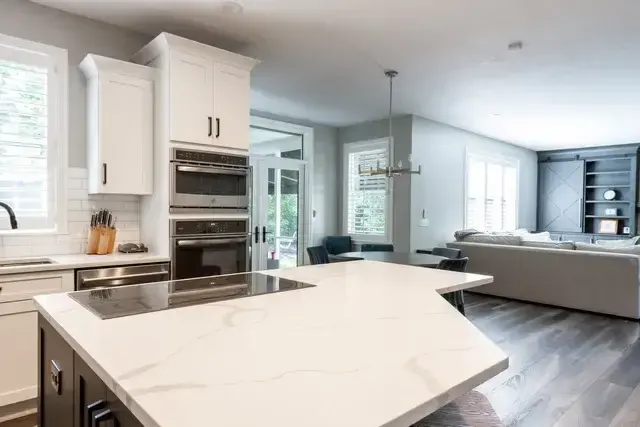
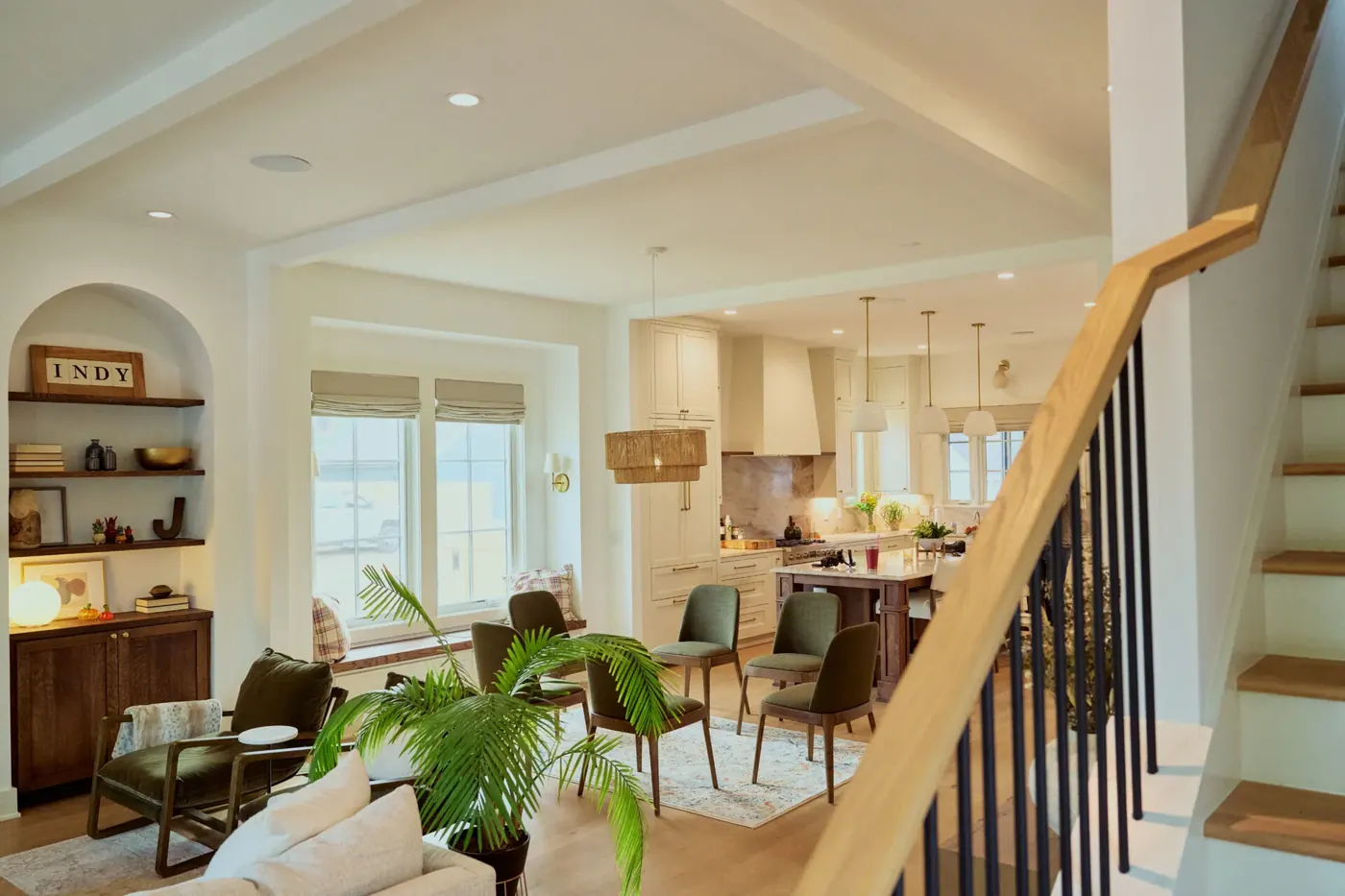
Custom shades measured and installed in WhitestownPlantation shutters fitted to a Whitestown windowCellular shades in a Whitestown living room
Scope of Work

What Outdoor Patio Shades Includes

Every Whitestown job is documented item by item. Here is what the crew covers.

Wind exposure assessed first, because wind is what destroys an outdoor shade and everything else is secondary

The mounting surface investigated for what's actually behind it, since anchors have to reach structure rather than trim

Beam, post and header conditions checked one by one on a covered porch instead of assumed from the elevation

Anchor type matched to the substrate, with masonry, wood framing and steel each getting their own hardware

A written wind plan agreed before the order, covering when the shade comes up and who is responsible for raising it

Guide system decided against exposure: free hanging with a weighted hembar, cable guides, or a zip track that captures both edges

Hood or cassette specified where the roll would otherwise sit exposed to weather year round

Drop height set so the hembar clears furniture, railings and the deck surface at full extension

Openness factor chosen per side, since the sun-facing elevation and the view elevation rarely want the same fabric

Insect and pollen behavior explained, because an open weave is a screen for sun and not a barrier for anything else

Motor and wind sensor specified where the shade is large or where nobody will reliably retract it by hand

Sensor limits stated plainly, as a wind sensor retracts a shade and does not make it storm-proof

Power path planned for motorized units, with any new circuit handled by a licensed electrical contractor

Seasonal removal or retraction discussed for winter, since central Indiana winters are hard on outdoor fabric left extended

Fabric fade and soiling disclosed before the sale rather than explained afterward

Contract paperwork covering hardware, fabric, anchoring and price handed over before the order, as IC 24-5-11 requires above $150

Anchors set into structure, brackets leveled across the run, and the fabric tracked square before we leave

Full extension and retraction cycled with you watching, plus the manual override shown on any motorized unit

Pricing

What Outdoor Patio Shades Cost in Whitestown

There isn't a clean published national figure for outdoor drop shades on a patio, so the honest way to frame the budget is against two categories that do publish. Retractable awnings run about $1,000 to $6,000 installed nationally, and motorized window coverings run about $300 to $1,500 per window installed. A patio shade generally sits inside that territory and isn't a quote for anything in Whitestown. Size is the first driver because these get big. The guide system is the second, and it's the one that matters most: a free hanging panel with a weighted hembar is the inexpensive version and a zip track that captures both edges is the one that survives a windy season. Mounting is the third, since anchoring into real structure behind a finish takes longer than anchoring into what's convenient. Whitestown Window Treatments quotes after seeing the structure in Boone County.

By Product

How Outdoor Patio Shades Differ by Product

Every product in this trade behaves differently in a room. Here is what that means for this work.

Zip track guides: The fabric edge runs in a channel down both sides and stays captured for the whole drop. It's the system that handles wind best by a wide margin, it costs the most, and on an exposed patio it's the difference between a shade that lasts and one that shreds.

Cable guides: Stainless cables tensioned top to bottom with the hembar riding on them. It's a middle path: far steadier than a free hanging panel, cheaper than zip track, and it still lets the fabric belly in a gust because the edges aren't held.

Free hanging with weighted hembar: The simplest and cheapest arrangement, with a heavy bar doing all the work. It's fine on a sheltered courtyard between two walls. On an open patio it's the version that ends up wrapped over itself after one storm, and we'll tell you that before you buy it.

Hood and cassette: An enclosure over the roll so the fabric isn't sitting in weather when it's up. Outside, this isn't cosmetic. An exposed roll collects grit and moisture between the wraps, and that's what ages a fabric from the inside of the roll outward.

Structural anchoring: Lag fixings or masonry anchors reaching real structure behind the finish, located by probing rather than by guessing. An outdoor shade in wind is a lever pulling on its brackets, and trim is not what you want between that lever and the building.

Motor with wind sensor: A motor that retracts the shade when a sensor reads sustained wind above a threshold you set. It's genuinely useful and it isn't a guarantee. A sudden gust can arrive faster than the shade retracts, which is why the wind plan still exists.

Solar screen fabric by openness: Exterior screens run from around 1% openness for maximum blocking up to 10% for view. Lower numbers cut more sun and see out less. On a patio the tighter weaves get hot and dark, so the choice is usually made per elevation.

Vinyl and clear panels: Solid or clear vinyl instead of an open weave, for people who want wind and rain held off rather than sun filtered. Clear panels are a different product with different expectations: they block weather, they don't breathe, and they scratch.

Side retention hardware: Hooks, tie-downs and tension points at the bottom corners for systems without full track. It's a low-cost way to keep a panel from moving, and it depends on somebody actually using it, which is worth being honest about.

Manual crank and override: A hand crank on a manual unit or an override on a motorized one. Every motorized outdoor shade should have a way to bring it up when power is out, and we show you where it is at handover rather than leaving you to find it in the dark.

Light Control

See What Each Fabric Does To The Light

Pick a fabric below and the window updates. It's a drawing rather than a photograph, so read it as a rough guide to what each family does in a Whitestown room, and to what it doesn't do.

Fabric type

Sheer, 10 percent openness

Ten percent of the weave is open, so you keep the view and most of the daylight. Glare drops a little. After dark, once your lamps are on, someone outside can read shapes through it, which is why this belongs on a view window rather than a bedroom.

Openness factor is printed on the fabric card, so you can compare one line against another before you order anything.

Keeps the viewNot private after dark

Solar, 5 percent openness

The usual pick for a west window or a covered porch. You can still read the yard through it, glare comes down noticeably, and the fabric intercepts a good share of the sun before it reaches you at four in the afternoon.

It also cuts the UV landing on floors and furniture. NFRC puts UV at roughly 40 to 60 percent of fading damage, so this slows fading rather than stopping it.

View and glare controlSlows fading

Solar, 3 percent openness

A tighter weave. The room goes dimmer and the view drops back to an outline. Choose it where the sun is the problem and the view is second, which around here usually means a west wall in July. That's a common call on this side of Indianapolis.

Openness affects how much you see out, not how private you are. A 3 percent fabric still shows silhouettes at night.

View becomes an outlineStrong glare control

Solar, 1 percent openness

Close to a solid fabric with a little view left in it. This is the strongest glare control in the solar family.

The trade is that it darkens the room on a gray January day too. Indianapolis averages a January high near 36F and the light is flat, so think about how the room reads in both seasons before you commit.

Darkest solar optionDim on gray days

Light filtering

No view through it. Daylight comes through the face diffused, so the room stays bright without a hot spot across the television or the kitchen island. This is the default for living spaces.

It isn't private in reverse at night. With the lamps on and the sun down, silhouettes still show.

No view through itBright without the glare

Room darkening

A denser fabric, usually with a liner behind it. Most of the light coming through the face is gone.

Light still arrives around the edges on an inside mount, so a room darkening shade gives you a dim room rather than a dark one. If someone in the house sleeps during the day, say so at the measure and we'll scope it differently.

Dim, not darkEdges stay bright

Blackout

The fabric itself passes essentially no light. What you'll still see is the perimeter. Lutron publishes an inside-mount light gap of about 3/4 inch per side on its Roller 20 and 64 shades, along with a standard factory deduction of 1/16 inch per side, and shades over 120 inches tall or past a 4:1 height-to-width ratio get larger gaps than that.

So if you need a genuinely dark bedroom, that gap has to be dealt with on purpose, either with side channels or by going outside mount. We tell you which one your opening can carry while we're still standing in the room.

Dark facePerimeter needs a plan

Openness factor is a measured fabric spec, so you can compare it line to line. The category names are not measured. One maker's room darkening can behave like another maker's light filtering, which is why the sample books come to the measure and get opened in the room they're going in, at the hour that room has the problem.

Common Questions

Outdoor Patio Shades FAQ

Questions we hear most often from Whitestown homeowners considering outdoor patio shades.

Posts, beams and the wood framing above the opening, located and confirmed before anything goes in. What it must not be fastened to is trim, a decorative band or anything applied to the face of the structure, because those pieces are held on with finish fasteners and a loaded shade will pull them off. On a Trailside patio with three car garage frontage and a covered rear space, the posts are usually where the load belongs. We find the structure at the site visit, and if the patio has nothing suitable we say so rather than fixing into something that will fail.
Side guides or tensioned cables running from the head down to an anchor at the deck or the post base, and a weighted bottom bar riding between them. Without that guidance the fabric bows out under wind pressure, flogs against its own hardware and tears at the hem. Cables are lighter looking and give a little in gusts. Rigid side channels hold the fabric tighter and cost more. On a west facing patio in Whitestown, where there's open ground and no windbreak in that direction, we'd specify guides rather than let a free hanging shade take the load.
Yes, and openness factor is the dial you turn. A 10 percent openness screen keeps a lot of the view and cuts a modest amount of light, while 3 and 5 percent cut far more and hold enough of the view to still be worth sitting behind. A 1 percent fabric is nearly a wall. On a Cardinal Pointe lot facing 175 plus acres of course with 15 water holes, most people land at 3 or 5 percent, because the reflected glare off open water is what actually drives you inside. We hang samples on the patio before you choose.
An openness rated solar fabric is not an insect screen and we won't sell it as one. The weave on a 3 or 5 percent fabric has openings large enough for small insects to pass, and the shade doesn't seal at its edges either. What it does is cut the sun and reduce the wind that makes a patio unpleasant. If keeping insects out is the goal, that's a different product with a fine mesh and a sealed perimeter, and it's honest to say the two goals often need two systems. Some people run a solar shade on the sun side and a mesh elsewhere.
Yes, three ways, and the choice usually comes down to how often you'll move it. A manual crank or a pull is the simplest and it never needs charging. A battery motor works and brings the same maintenance conversation as anything else motorized, since Hunter Douglas puts PowerView battery life at about one year and an outdoor motor works harder. A small solar panel mounted where it catches sun keeps a battery topped up, which suits a patio nobody wants to run an outlet to. We'd rather discuss that at the quote than retrofit power later.
The muggy season in central Indiana runs from around 25 May to 22 September, and that stretch is where an outdoor shade earns its keep, along with the low evening sun in spring and fall. A January averaging a 20.9 degree low is not patio season and no fabric changes that. Realistically you're buying back the afternoon hours across four to five months plus the shoulder evenings. If the patio is a place you eat dinner in June and July, that's a lot of use. If it's mostly a route to the yard, spend the money inside instead.
Wind, by a distance. Everything else on the list is slow: fabric fades, hardware weathers, dirt accumulates. Wind is the failure that happens in one afternoon. An extended shade is a large sail attached to a building by a few brackets, and the load it puts on those brackets during a gust is far higher than anything it sees on a calm day. That's why the wind conversation comes before the fabric conversation, and why we ask about your patio's exposure before anyone picks a color.
A written understanding of what happens when it blows. That covers the threshold at which the shade should come up, whether a sensor or a person is responsible for making that happen, and what the shade does when nobody is home. It also covers the winter, because a shade left extended through a central Indiana January is taking abuse it wasn't designed to absorb. Without a plan, an outdoor shade lasts exactly as long as your luck does.
No, and any company telling you otherwise is overselling. A wind sensor reads sustained wind and retracts the shade when it crosses a threshold, which handles the ordinary case well. What it can't do is beat a sudden gust, because retraction takes time. It also depends on power and on the sensor itself continuing to work. Treat it as a very good safety net over a wind plan, not as a replacement for one.
Because the anchors are what stand between a wind load and the ground. Fixings driven into trim, a thin finish or hollow material will hold on a still day and pull out on a windy one, usually taking a chunk of the building with them. We probe to find real structure behind the surface and set anchors into it, choosing hardware for the substrate. On a masonry wall that means masonry anchors reaching past the veneer, not expansion plugs in mortar.
Exposure decides it. Zip track captures both fabric edges in a channel for the entire drop, so the panel stays flat and there's nowhere for wind to get behind it. It costs more and it's the right answer on an open Whitestown patio with a clear approach. Cable guides steady the hembar without capturing the edges, which is a reasonable middle ground on a partly sheltered space. Free hanging is for a courtyard with walls on both sides, and not much else.
A solar screen is a sun product, not an insect barrier, and the openness numbers make that clear: even a tight weave has gaps. Bugs come around the edges, under the hembar and through the fabric on the more open weaves. If insects are the actual problem, you want a screen system built for that, or a solid vinyl panel that closes the space off entirely. We'd rather sort that out at the quote than have you discover it in July.
Meaningfully, in direct sun, and less than people hope on a humid evening. An exterior screen intercepts solar radiation before it reaches the space, which is why an outside shade beats an inside one on heat. What it can't do is lower the air temperature or move the humidity, and the muggy stretch from late May to late September in central Indiana is as much about moisture as heat. Expect real shade and real glare reduction rather than air conditioning.
It depends which problem you're solving on which side. Facing the low afternoon sun, something in the 1% to 3% range blocks the most and gives up the most view. Where the view is the point and the sun is glancing, 5% or 10% keeps the space open and still cuts glare. Most patios end up with different fabrics on different sides for exactly that reason. Look at samples outdoors on the actual patio, because a swatch under showroom lighting tells you almost nothing.
Retracted, at minimum, and on some sites removed. Fabric left extended through freezing and thawing with snow load on it ages fast, and the hardware collects moisture where it sits. A hood or cassette helps a lot by enclosing the roll. On a fully exposed patio with no cover, taking the fabric down for the season and storing it dry is the thing that adds years. We'll tell you which category your patio is in.
Not from an open weave, and this catches people out. During the day, an outdoor screen reads as a screen from outside because it's brighter out there than in the shaded space. After dark that reverses, and a lit patio behind a 5% fabric is visible from the yard. If evening privacy is a requirement, that's a solid fabric or a vinyl panel, not a solar screen, and we'll spec the two differently.
Years, and it depends heavily on exposure and how often it's left down. Exterior screen fabrics are built for UV and they still change over time, particularly on a hard south or west elevation. Color softens and the weave collects grit that a rinse takes off. NFRC attributes roughly 40 to 60 percent of fading damage to UV, which is why a shade that retracts under a hood when it isn't needed outlasts one that stays extended all summer.
Yes, and on anything large it's the practical choice, because hand cranking a wide outdoor shade twice a day is a task people abandon by August. A motor also enables the wind sensor and lets the shade run on a schedule or a sun sensor. Power is the thing to plan: on a covered patio there's often a circuit close by, and where there isn't, a licensed electrical contractor brings one. Battery motors work outdoors too, with the same annual interval and a colder winter to contend with.
Wider than most interior products and not unlimited, and the ceiling depends on the system, the fabric and the wind exposure together. What we avoid is stretching one panel across an opening that really wants two, because a wider panel means more fabric load on the same brackets and more chance of the hembar racking. Splitting a long run into two units with a center support usually behaves better and costs less to fix if something does go wrong.
Rinse the fabric with a hose a couple of times a season, more if you're under trees, and let it dry fully before retracting so nothing rolls up damp. Check the anchors and the bracket fixings once a year, since anything outdoors that moves works its fixings over time. On a motorized unit, cycle it fully every so often over the winter rather than leaving it parked for six months. It's not much, and skipping it is what turns a good system into a service call.
Free In-Home Measure

Schedule Your Free In-Home Measure in Whitestown

Contact Information

Reach Us Directly

Our team prioritizes scheduled measures and service calls, and books in-home measures during business hours.

Office
1417 Commerce Avenue, Indianapolis, IN 46201
Hours
Mon-Fri 8a-6p
Service Area
Whitestown, IN and Surrounding Areas

Ready to Book Your Measure?

Call us to set up an in-home measure, or to ask about a treatment that has stopped working. We will talk it through on the phone first.

Service area

Serving Whitestown and the surrounding area

Call NowGet Quote